

Not as firm as before? Not lasting as long? Or simply noticing that things aren’t the same anymore?
Sometimes men first notice changes in their sex life.
Your erection isn’t as firm as before. Staying harder becomes more difficult. Ejaculation becomes painful.
Those changes can automatically be blamed on the prostate. Prostate conditions and prostate-cancer treatment can be associated with changes in sexual function.
And that’s why your sex life can sometimes be the first reason to start paying closer attention to your overall prostate health.
The signs may look ordinary enough that many men simply accept them as “Getting Older.”
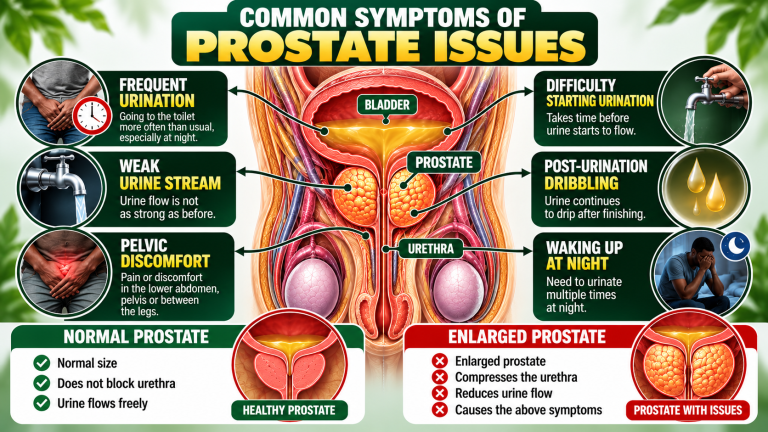
These symptoms are common with benign prostate enlargement and can also occur with other urinary conditions, which means the symptom alone cannot tell you exactly what the cause is.
They can start slowly and begin to affect a man’s urination, sleep, comfort, and sexual life without him paying much attention to it.
What seems small today can become a bigger problem when it is ignored for too long.
Don’t wait until the signs become impossible to ignore before taking your prostate health seriously.
More concerning symptoms can include:
In advanced prostate cancer, the disease can spread beyond the prostate, including to the bones.
This is why persistent or worrying symptoms should not simply be ignored or self-diagnosed.
Because they are often trying to solve the part of the problem they can feel.
One person looks for something for frequent urination.
Another searches for weak urine flow. Someone else is looking for help with sexual performance.
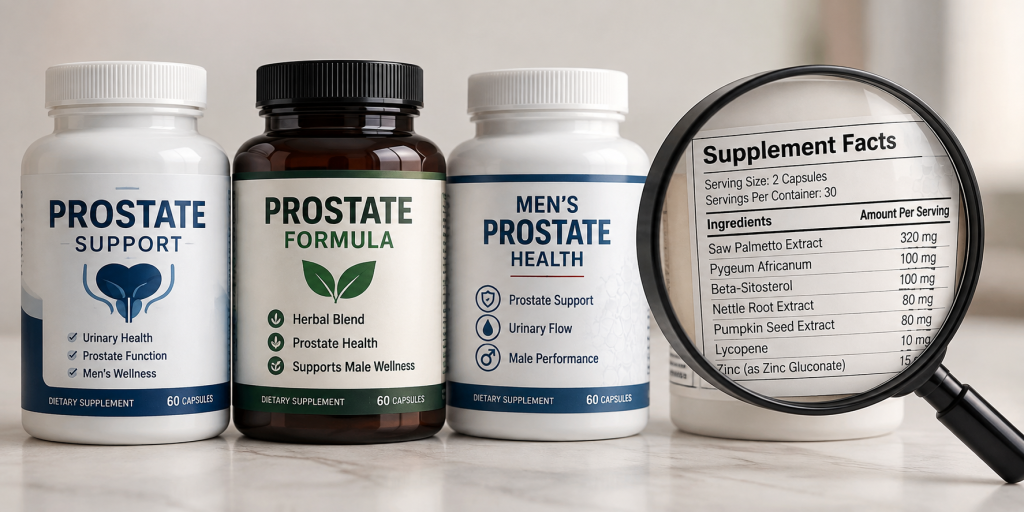
And many products focus heavily on one popular ingredient or present a long ingredient list without clearly explaining the formulation.
Research on popular prostate botanicals is not automatically positive across every preparation. Saw palmetto, for example, has produced mixed results depending on the preparation and use.
A 4-botanical formulation created with prostate health in mind.
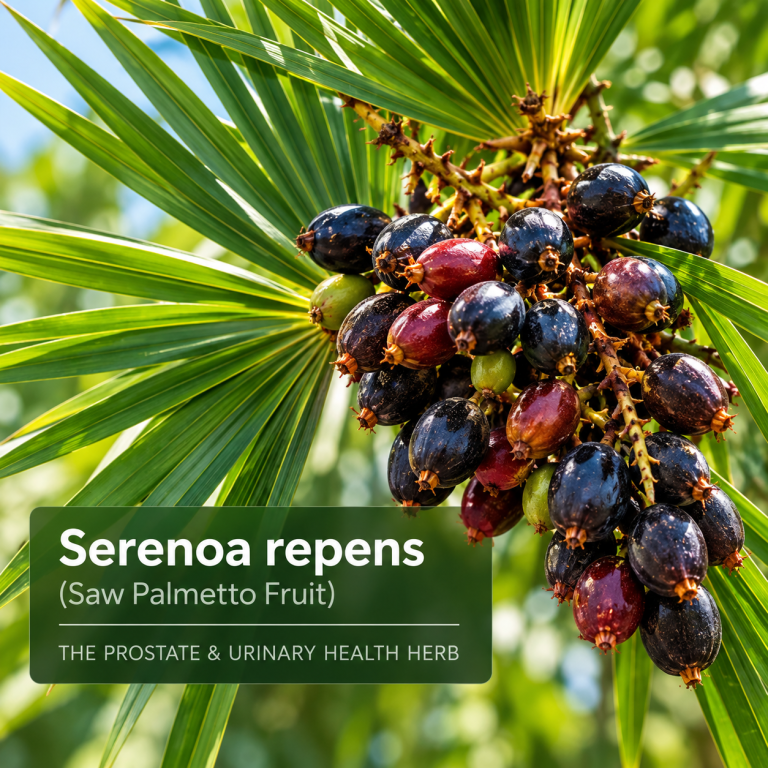
Serenoa repens, commonly known as saw palmetto, is one of the most widely studied botanicals used in products formulated around prostate and urinary health. Its dark berries have a long history of traditional use, and researchers have investigated the plant particularly in relation to urinary symptoms associated with an enlarged prostate (BPH).
Why does that matter?
As the prostate enlarges, it can put pressure around the urethra and contribute to changes such as weaker urine flow, difficulty starting, frequent urination and waking at night. Saw palmetto has therefore attracted considerable attention in prostate-health research, although clinical results have varied depending on the preparation and how it is used.
HERBIVA FORMULATION: 60%
Prunus africana, commonly known as the African plum or Pygeum, is a tree native to parts of sub-Saharan Africa. Its bark has a long history of traditional use, particularly in connection with urinary problems and prostate health, and it has been studied for symptoms associated with benign prostate enlargement (BPH).
Why does that matter?
As the prostate becomes enlarged, it can put pressure around the urethra and contribute to changes in urination such as weaker flow, difficulty starting and frequent trips to the toilet. Research on Prunus africana has found some evidence of improvement in certain BPH-related urinary symptoms and flow measures, although the available studies have limitations and have used different preparations and doses.
HERBIVA FORMULATION: 20%
Piper nigrum, commonly known as black pepper, is a familiar botanical traditionally used as a spice and in herbal preparations for centuries. Its active constituent, piperine, has attracted scientific interest for its effects on the absorption and activity of certain compounds, which is one reason black pepper is often included alongside other botanical ingredients in herbal formulations.
Why does that matter?
Herbiva combines Piper nigrum with three other botanicals rather than relying on a single plant ingredient. In the formulation, black pepper makes up 10% of the blend, contributing to a carefully defined four-botanical formula designed around prostate health and healthy urinary function.
HERBIVA FORMULATION: 10%
Zingiber officinale, commonly known as ginger, is a flowering plant whose rhizome has been used in traditional medicine for centuries. Ginger contains naturally occurring compounds that have been widely studied for their biological activity, including research into inflammatory and oxidative processes.
Why does that matter?
Herbiva includes ginger as part of its four-botanical formulation rather than relying on a single ingredient. At 10% of the formula, Zingiber officinale forms one part of the broader combination created around prostate health and healthy urinary function.
HERBIVA FORMULATION: 10%
IT’S NOT JUST ABOUT HAVING HERBS. IT’S ABOUT THE FORMULATION.
Herbiva clearly states its composition instead of hiding behind a vague ingredient list.
FOUR BOTANICALS. ONE PROSTATE-FOCUSED FORMULATION.
Herbiva brings together four botanicals with different traditional and research backgrounds in one clearly defined formulation.
1 capsule in the morning after eating.
1 capsule in the evening after eating.
✓ Plus 1 FREE Immune-booster (worth ₦20,000)
✓ Free Delivery (worth ₦5,000)
✓ Pay On Delivery
✓ Plus 2 FREE Immune-booster (worth ₦40,000)
✓ Free Delivery (worth ₦5,000)
✓ Pay On Delivery
🚨 PLEASE NOTE: Do not fill this form if you are not ready to buy. Failed deliveries cost us significant dispatch fees. Kindly respect our process and order if and only if you are completely ready to pay on delivery.
Sexual changes. Changes in urine flow. Frequent trips to the toilet. Waking up repeatedly at night. Persistent pelvic or back pain. Blood in urine or semen.
These symptoms can have different causes, and prostate cancer can exist without obvious early symptoms.
Don’t diagnose yourself from symptoms alone. Pay attention, get checked when necessary, and take your prostate health seriously.
Herbiva is positioned for prostate health. It is not a substitute for medical diagnosis or treatment of prostate cancer. Seek professional medical advice for persistent, severe, or concerning symptoms.